
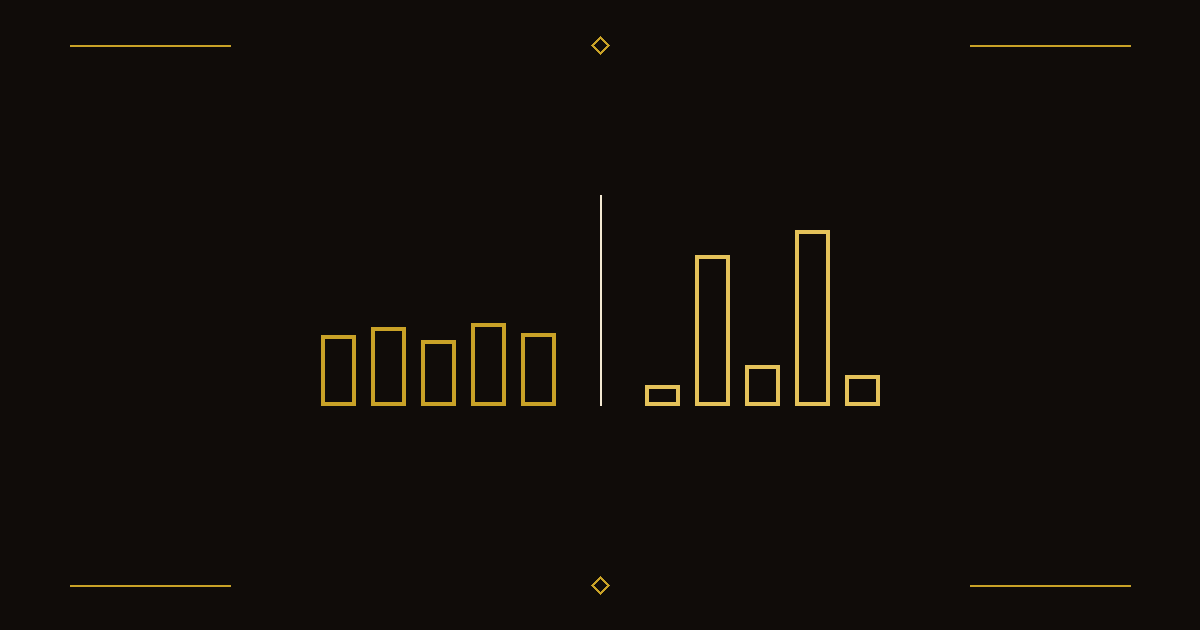
Two slots can share the exact same RTP — say, 96% — and still feel completely different to play. That difference comes down to volatility: how often a slot pays, and how big those payouts tend to be when they land.
What volatility actually measures
RTP tells you what a slot returns on average over a very long run. Volatility tells you the shape of that return — low volatility spreads smaller wins more frequently, while high volatility holds back for long stretches before releasing rarer, much larger payouts.
Low volatility: steadier, smaller swings
Low-volatility slots hit small wins often enough that your balance rarely drops sharply between them. That makes them a better fit for a smaller bankroll or a session where you mainly want to play for longer without big swings.
High volatility: fewer hits, bigger spikes
High-volatility slots can go through long dry stretches with no meaningful win, followed by a payout large enough to change the whole session. That pattern demands a bankroll built to survive the dry stretch — betting big on a high-volatility slot with a small bankroll is the fastest way to bust out before the spike ever arrives.
How to actually match it to your bankroll
As a rough guide, a bankroll of 200-300x your bet size gives more breathing room on high-volatility slots, where 50-100x can be plenty on low-volatility ones. If a slot's volatility rating isn't listed, a quick look at its paytable — how big the top few prizes are relative to the smaller ones — usually gives it away fast.
Frequently asked questions
What is slot volatility?
It is how a slot pays out. High volatility means rare but larger wins; low volatility means frequent but smaller wins.
Which volatility suits a small bankroll?
Low or medium volatility, because it spreads smaller wins across more spins and keeps your balance alive longer.